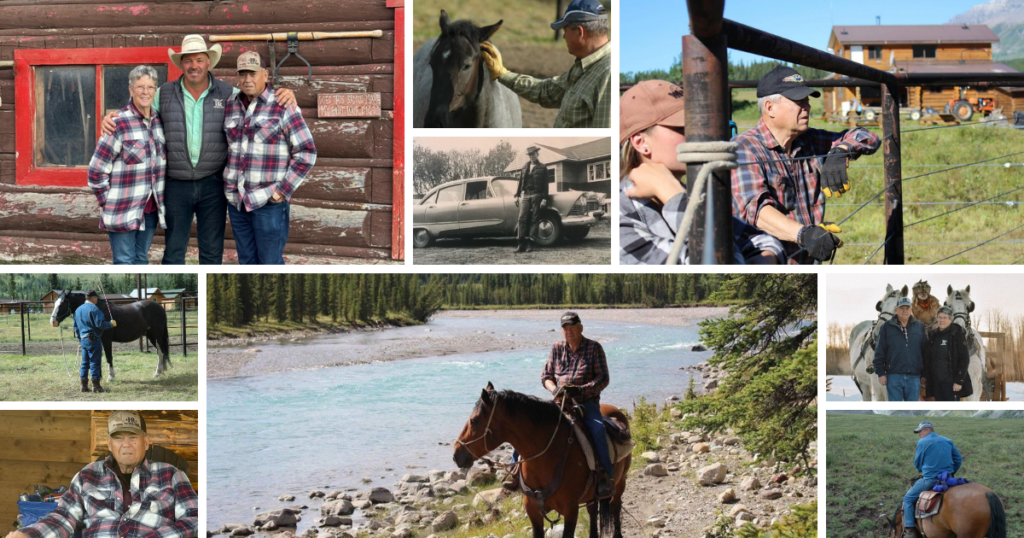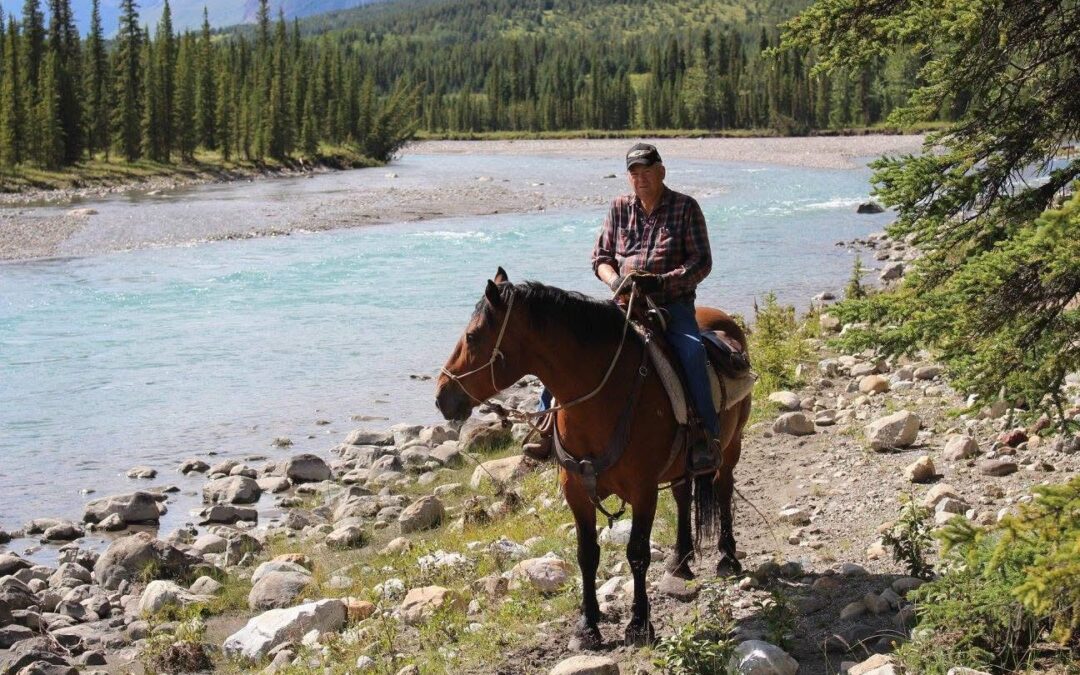
I debated whether to do this or not. I loved the idea of a tribute to Dad, but I still struggle with him being gone, and it’s easier to try not to think about it. I was always very proud that he was my dad. I don’t want to come across as whiny because he wouldn’t like it, and I’m not the first or last person to lose a parent. It’s part of life’s journey. I thought I would start and see how it feels.
Many of you met my parents, Mel and Ethelann, over the years, either at the Horse Ranch or at an event somewhere. They were my biggest supporters. They loved to visit with you all and couldn’t wait for the next chance to get together and meet more people. They never missed a potluck at the ranch or an event on the road. It didn’t matter how far away it was; they’d drive or get on a plane and come support and help any way they could. I cannot remember a time when they weren’t trying to make whatever I was doing easier.
As many of you know, Dad wasn’t one for showing emotion, but he just couldn’t hide it at times, and it was the talk of the town when it happened. If a student or friend of mine saw Dad cheer, clap, or even shed a tear of happiness, they couldn’t wait to share the news.
If I was with him, he’d tell me about all the great things my brother and sister were doing. Then he’d go into stories about their kids, his grandchildren. He was very proud of his children and his grandchildren. As he got older, as it seems to happen to everyone, we’d get to hear all the stories many times over about things my brother, sister, or his grandchildren did. He’d proudly comment on what they did yesterday or three years ago.
I realize that not everyone gets that kind of support from their parents, but that’s what we got our whole lives, and I’m sure going to miss it. I think your dad is the only man on earth who truly wants you to do better than him. It’s strange to think about. I feel very fortunate that we had him until he was 85, for his support and life lessons.
He wasn’t one for many words. Face-to-face, telling you “good job,” “well done,” or “nice work” wasn’t his style. He would give you a job and let you get at it. If he didn’t say anything after that, then you knew you were doing at least okay. When it comes to life lessons, he never spoke them. He actually just lived them so you could learn by example. He taught me that self-esteem comes from what you do, not what others say about you.
He worked seven days a week and after supper, unless he was running us kids to something. I never heard him complain about things being too tough or too much work. If we ever complained about anything, he was quick to remind us it could be worse and give an example. If I complained about a job he gave me, he’d say something like, “Lots of people work all day and only get one piece of bread with no breaks.” If we didn’t want to eat something, he’d tell us how lucky we were to have food and that there were starving kids in Africa. Not sure why it was always in Africa, but I sure knew I didn’t want to go there.
He was teaching me about perspective well before I could pronounce the word. Without ever saying it, he taught me that my perspective creates my reality, so watch out which perspective you choose. Changing how you think will change how you live.
If you got hurt, he’d say, “You’re fine. It’s a long way from your heart.” He had me swinging a big sledgehammer, pounding on something on the tractor out in the field. I had to hit it hard, and he was holding the bar I was hitting. Of course, I missed the bar after a few swings and hit his forearm with the five-pound sledgehammer. He went completely white, dropped the bar, sat against the tire for a minute, and didn’t say a word. Then he picked up the bar again and said, “Hit the bar, not my arm.” I guess it was a long way from his heart, so we kept going. I thought I must have broken his arm, but we just carried on like nothing had happened. Practise what you preach. Don’t say one thing and do another.
I was probably 10 or 11, and they got me to plant and look after a bunch of potatoes in the garden. Seed them, hill them, pick the weeds all summer, then harvest them. All with the plan of selling potatoes by the bag to get enough money to buy my own pig. I sold my potatoes, then bought a pig. Fed her and shovelled pig poop all year. Got her bred, then had piglets to sell.
There were lots of pigs besides mine in the barn, and every Saturday it was time to shovel out the pig pens. Wheelbarrow it out the barn door and dump it. It was pretty funny thinking back. I’d put too much in the wheelbarrow for my age and spill it in the alleyway and have to start again. In the winter, I wasn’t smart enough to get the snow shovelled out of the way outside the door. So I’d make it down the alley, then hit the snow. Couldn’t hold the weight I’d just put in, and I’d upset it again right outside the door. I’d have to shovel it into the wheelbarrow again. For some reason, I figured the wheelbarrow should be full before emptying.
I got enough money together selling piglets to buy a heifer. Then the plan was to breed the heifer, get a calf, and sell it. I ended up with, I think, three cows calving every spring. I got to have a business of sorts of my own, learn about work, the value of a dollar, and get the idea of how a person might make a living, what work might feel like, and how one thing leads to another. I still remember, right from selling potatoes to selling calves in the fall, the checks just kept getting bigger, and man, was it exciting.
Another lesson I will never forget was when he said, “If you want to work for someone or someplace, tell them you’ll do it for free for a week.” If they still want you around at the end of the week, they can start paying then. If not, he’d say, “Oh well, you learnt something.” He’d always say to leave things better than you found them. I use that example in my business to this day and have passed on those ways to my daughters. Don’t talk about being great to have around or being a really valuable asset. Prove it.
Somewhere in there, I had a cow to milk in the morning before school and every night after school. No money for me in that job, but it sure made good butter, cream, and milk for the family. Dad told me I’d get strong wrist muscles so I could shoot the puck better. They ran me to hockey every winter from nine years old until I had my own licence.
Dad and Mom loved the horses and were very instrumental, again, in helping me. There was a stallion that I wanted to buy, but I had very little money. He was going to an auction, and I couldn’t get to it because of work, so Dad went to bid on him for me. I said I could afford to pay $5,000. Twenty-five years ago, that was a decent amount to pay. Well, he called and said he bought him. I was pretty excited, but I noticed he didn’t mention how much. I finally got brave enough to ask, and he said, “A bit more than you wanted to spend.” I said, “How much more?” He said, “There were another couple of people that wanted him pretty bad too.” I said, “Okay, so how much?” Well, Dad says, “Double. $10,000.” He knew I wanted that horse, and he wasn’t going to let anyone outbid him. That stallion went on to put over a hundred colts on the ground for us and, more than that, helped me immeasurably in my career in the horse world. The best math to learn is the future costs or benefits of your current decisions.
I could go on with stories, but they might only be special or interesting to me. Right to the moment his hand went limp in mine, he was living by example, letting us know that it can always be worse and what we have is better than many. He often would pour a whiskey when I stopped over and had a visit. He wanted to have one more with us before he left. He didn’t have much strength to hold a glass and was using a straw. For the last drink, he was holding his own glass. He didn’t want a straw. We had some of his favourite old country music playing. He tried to smile, sing a word or two, and even jig around in the bed. He knew he was passing but was living what he’d taught us until his last breath. The best sermons are lived, not preached.
I wanted to share this with all of you because you were part of the community he enjoyed being around. Many of you met my Dad and enjoyed spending time with him at the ranch, whether around the potlucks, during other ranch adventures, or simply in the moments you shared together. My Dad genuinely enjoyed getting to know each of you. He took joy in seeing you at the ranch, pursuing your horsemanship, learning, and growing in your journey with horses. He was happy to see people come together around something they cared about, and so many of you were part of that.
I’m very fortunate to have had the guidance and direction I’ve had from my parents and hope to be able to make Dad proud and continue on with the lessons and examples he shared as he watches over us. Thank you, Dad, for everything!
Glenn